
Gum Recession
When your gums recede, pockets develop between your teeth and gum line.
Gum recession occurs when the gum line recedes from the teeth, exposing the underlying roots. Numerous things, including forceful brushing, smoking, and even heredity, contribute to its development. Antibiotics, antimicrobial mouthwashes, and surgery are all forms of treatment. Although gum recession cannot be cured, therapy can stop it from worsening.
What is Gum Recession?
When your gums start to draw away from your teeth, this is known as gum recession, also known as receding gums or gingival recession.
Your teeth’s roots become visible, which often results in increased sensitivity to both hot and cold objects. Because tooth root surfaces are not protected by hard enamel like the tooth crowns are, they are more sensitive.
Pockets form between your teeth and gum line as your gums recede.
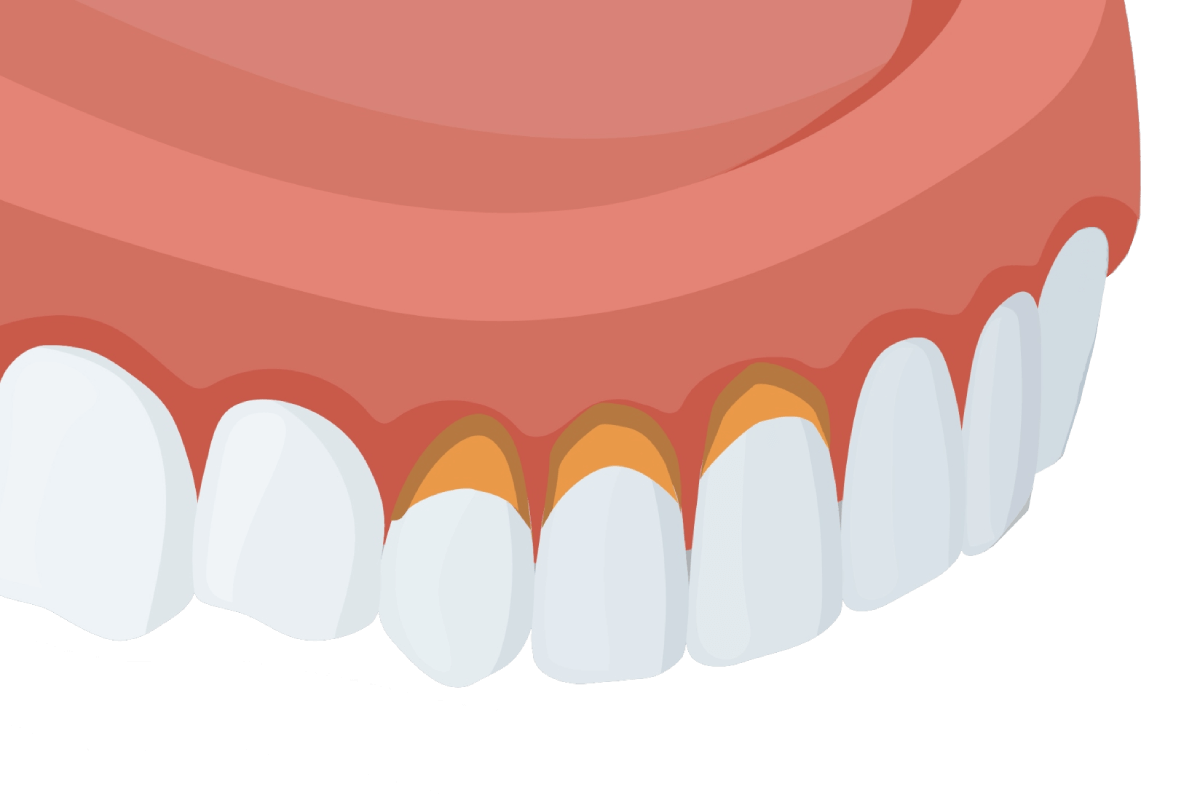
This makes room for bacteria to gather, which can result in illness and infection. The tissue and supporting bone structure that make up your teeth can become destroyed if untreated, which can result in tooth loss.
Your gums may recede on just one tooth, just a few teeth, or all of your teeth, depending on how severe the disease is. In addition, the teeth seem longer than they are. Gum recession makes your teeth and tooth roots more vulnerable to decay.
What causes gum disease?
Both forms of gum disease often stem from poor oral hygiene as plaque builds up on the teeth. Plaque is a sticky substance formed by bacteria that glues itself to your teeth and only comes off with good brushing and flossing, so if you’re not cleaning your teeth well enough or regularly enough, the plaque can start to irritate your gums, and will harden into a substance known as tartar that cannot be removed by brushing alone – only a dental professional can remove it. Tartar is even worse for your gums than plaque, and will continue to irritate them and make gum disease worse.
Nevertheless, a variety of factors can result in gingivitis and periodontitis.
These include:
- inadequate or inconsistent flossing and brushing
- unhealthy eating patterns, such as consuming too much sugar
- Using drugs and smoking
- Several medicines
- Diabetes with a few additional ailments
- an inherited propensity
- Puberty
- Pregnancy
You can avoid or control problems by working with your dentist to identify the root of your gum disease.

Doncaster: 1/696 Doncaster rd, Doncaster 3108;
(03) 9077 1252
Opening Hours
Monday-Thursday 9:00am-5:30pm
Friday 8:30am-3:30pm
Saturday Closed
Sunday Closed
info@britedentclinics.com.au